
From Vilnius to Paris
Born in Vilnius in 1894, Messenblum studied at the city’s drawing school with I. Rybakov and continued his training in Moscow during the First World War. Back in Lithuania from 1920, he taught drawing at a Jewish secondary school in Kaunas, where he encouraged the young Neemija Arbit Blatas. His early exhibitions included portraits, urban scenes and compositions of Jewish life. In 1923 he showed works titled The Jew, The Gate and The Courtyard.
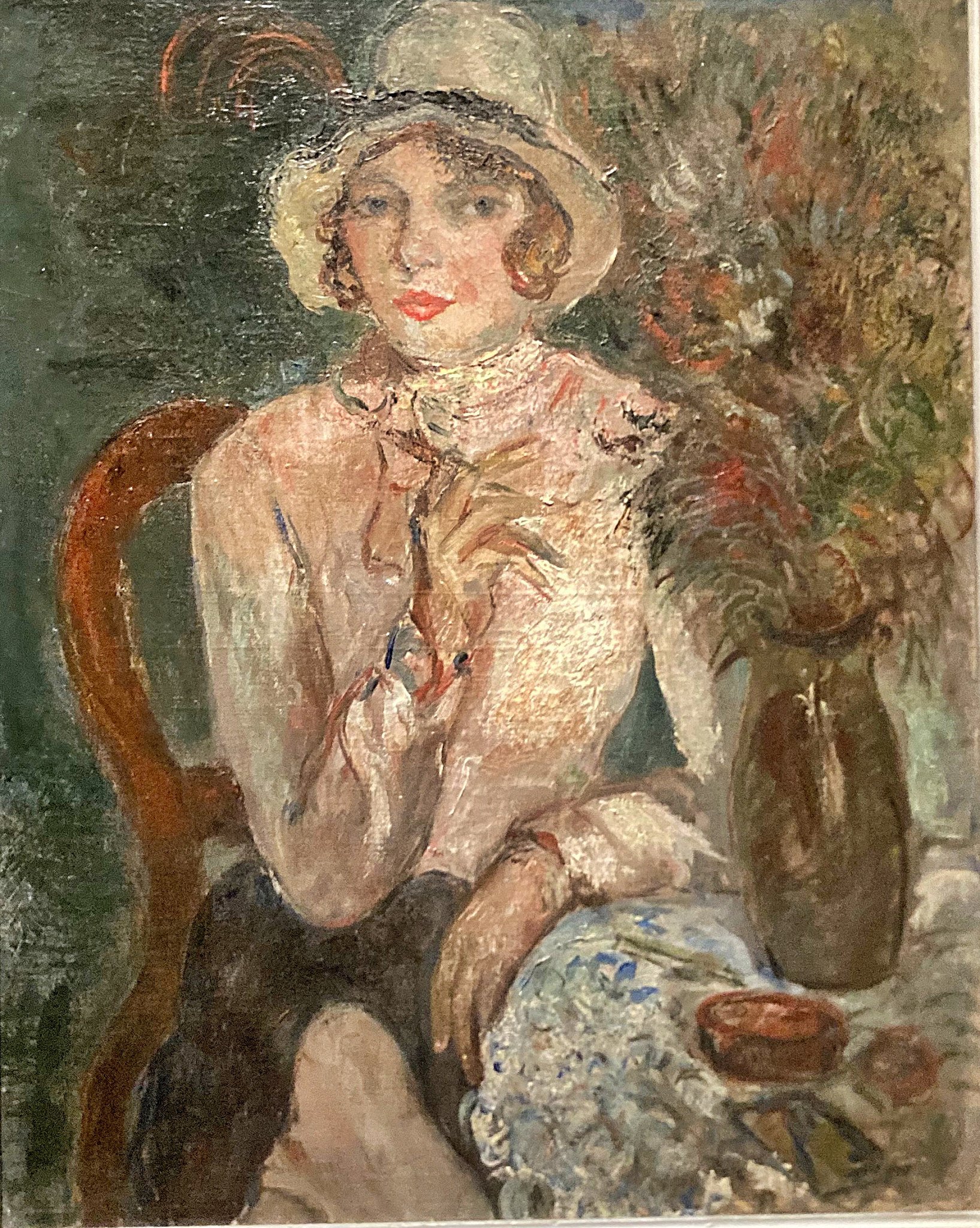
In 1924 he moved to Paris and worked under the name Jacques Missene. His painting developed in contact with the École de Paris, moving towards a more fluid treatment of colour and light, while Jewish motifs remained important in his graphic work.
The Paris dealer Faneras
An especially promising lead appears in research by art historian Vaida Sikorskaitė, who cites a posthumous account of a dealer named Faneras. According to that account, he approached Missene after an exhibition, offered a monthly allowance and arranged to purchase the artist’s future production. His paintings were then reported to have entered foreign collections.
“Faneras” is the spelling preserved in the Lithuanian source. We have not yet identified the dealer’s full name, gallery or surviving sales records. The story is therefore an important lead, not proven provenance for any individual painting. Dealers’ labels, invoices and family archives may help trace what was sold in Paris.
Where are his paintings today?
A posthumous exhibition in 1934 brought together roughly 120 paintings and 40 drawings or graphic works. Their subsequent histories have not been reconstructed in full, and a substantial part of Missene’s output is understood to have remained abroad. Some paintings may still be held in private collections or recorded under another spelling of his name.
We are particularly interested in portraits, still lifes, landscapes and Paris-period paintings, as well as photographs of works, exhibition catalogues and correspondence connected with Faneras. We welcome confidential enquiries from owners and descendants, including where attribution or provenance remains uncertain.