
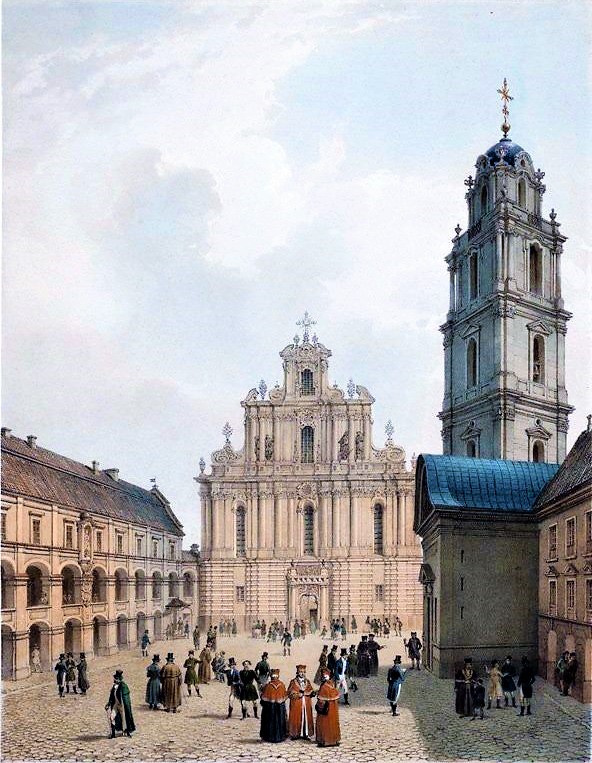
The expression “Vilnius School of Art” is most useful when it is kept historically precise. In the strict institutional sense, it refers to the art and architecture departments of Vilnius University active between 1793 and 1832—the Department of Architecture, Drawing and Painting, Sculpture and Engraving—and to the professors and students formed within them. The university was closed in 1832, and with it the Vilnius Art School ceased to exist as an institution. What survived was its tradition: a chain of pupils, family studios, private schools, drawing classes and collecting circles through which the teaching of Smuglewicz, Rustem and their generation continued to shape artistic life in Vilnius. This distinction matters. Artists such as Józef Marszewski or Albert Żamett belong to the nineteenth-century Vilnius artistic tradition, but they should not be described as students or members of the university school itself.
That distinction makes the history richer rather than narrower. The artists of the Vilnius Art School were never culturally isolated, and neither were the generations who followed them. They inherited the visual traditions of the former Polish–Lithuanian Commonwealth and the Grand Duchy of Lithuania, travelled through St Petersburg, Rome, Paris, Dresden, Düsseldorf and Munich, and brought new academic, Romantic and realist approaches back into the cultural orbit of Vilnius. The story is therefore best understood in two connected layers: first, the institutional Vilnius Art School of 1793–1832; second, the post-1832 network that preserved, transformed and internationalised its legacy. For The Missing Canvas this distinction is also important for provenance research, because works from both layers were frequently commissioned for private families and later dispersed through inheritance, political upheaval, war and emigration.
A school before it had a name
The institutional origins of the Vilnius School predate the term by which it is now known. Modern scholarship uses “Vilnius Art School” as a conventional designation for the university departments of art and architecture active from the 1790s until the closure of the university in 1832. This distinction is important because it prevents us from imagining a rigid academy whose members followed a single doctrine. In reality, the school was an evolving intellectual environment. Architecture, drawing, painting, sculpture and engraving developed at different moments, under different professors, and the artistic language changed as generations succeeded one another. Yet certain principles remained unusually durable: disciplined drawing, close observation of nature, respect for historical and architectural monuments, and the conviction that professional art could contribute to public culture. Those values would survive even after the university itself disappeared.
The wider setting was equally important. Vilnius at the turn of the nineteenth century was still marked by the memory of the Grand Duchy of Lithuania and by the intellectual energy of a university whose students and professors included some of the most important figures in regional science, literature and public life. The city was multilingual and socially complex; its artistic patrons included aristocratic families, clergy, professors, landowners and an increasingly self-conscious urban intelligentsia. Art was therefore taught not in isolation but beside history, archaeology, medicine, literature and architecture. The close relation between art and scholarship helps explain why so many artists associated with Vilnius became attentive not only to human likeness but also to monuments, ruins, costume and topography. In their work, the visible world often became a form of historical evidence.
Franciszek Smuglewicz: Rome, Classicism and the foundation of professional training
The decisive figure at the beginning of this history was Franciszek Smuglewicz (1745–1807). His appointment in 1797 as the first professor and head of the newly established Department of Drawing and Painting gave the university an artist of exceptional European formation. Smuglewicz had spent roughly two decades in Rome, studied at the Accademia di San Luca and worked in the international environment surrounding the study and publication of ancient monuments. He returned to the Commonwealth with a command of Enlightenment classicism but also with an unusually broad understanding of what an artist could do. He painted history, mythology, portraiture, religious subjects and landscapes; he designed interiors and monumental decorations; and he treated the past not simply as a source of picturesque motifs but as a field of serious intellectual inquiry. In Vilnius he created the first systematic programmes for drawing and painting and helped establish the idea that artistic education could be professional, structured and socially significant.
Smuglewicz’s significance also lies in the range of artists he formed. His students included Jan Damel, Józef Oleszkiewicz and Józef Peszka, among others, and the values of his teaching continued long after his death. His example connected Vilnius with Rome and with the larger European culture of antiquarianism, classical archaeology and historical painting. At the same time, his work was rooted in local commissions, churches, portraits and the visual memory of the Commonwealth. This combination—the international academic model joined to a strong interest in local history and place—became one of the deepest continuities of the Vilnius tradition. It helps explain why later artists could move easily between Italian ruins and Lithuanian castles, between classical composition and the landscape of the Neris.
Jan Rustem and the consolidation of the Vilnius School
If Smuglewicz founded the institutional basis of the school, Jan Rustem (c. 1762–1835) gave it continuity, personality and a stronger public presence. Rustem became Smuglewicz’s adjunct in 1798 and remained associated with the university until 1832. Trained in Warsaw in the circles of Jean-Pierre Norblin and Marcello Bacciarelli, he brought a different sensibility from Smuglewicz: more intimate, more psychologically alert and particularly suited to portraiture. By the second decade of the nineteenth century he had become one of the defining figures of artistic Vilnius. He prepared proposals for reforming art education, built up teaching collections and, beginning in 1820, organised regular exhibitions of student work. These exhibitions were among the earliest public art exhibitions in the city and helped create a social space in which art could be discussed outside the private house or church.
Rustem’s portraits reveal the social world that made such an artistic culture possible. He painted professors, physicians, landowners, aristocrats, intellectuals, friends and members of his own circle. The surviving works form a remarkable visual archive of early nineteenth-century Vilnius, but they also show a stylistic transition. Classical restraint remains, yet faces are observed with increasing directness; sentimental intimacy and early Romantic psychology enter the portrait without destroying its compositional discipline. Rustem’s influence was therefore both institutional and visual. His pupils learned drawing and composition, but they also absorbed a way of looking at individuals and at the world around them. The result was not a single “Rustem style” repeated mechanically by a generation, but a culture in which individual observation became increasingly important.


From Classicism to Romanticism: Damel, Oleszkiewicz, Wańkowicz and Smokowski
The first generations trained in Vilnius demonstrate how quickly the school moved beyond the boundaries of late Enlightenment classicism. Jan Damel, who studied with Smuglewicz and Rustem, worked across portraiture, history painting, religious subjects and landscape. His career, disrupted by exile to Siberia and later continued in Minsk, illustrates the geographical instability that would become common among artists from the region. Józef Oleszkiewicz followed another path: after training in Vilnius he studied in Paris with Jacques-Louis David, returned for several years and then established himself in St Petersburg. Their careers make clear that the Vilnius School was never provincial in the narrow sense. Its students could enter the leading artistic centres of the Russian Empire and Western Europe because the intellectual and technical foundations received in Vilnius were compatible with broader academic culture.
By the 1820s Romanticism had become increasingly important. Walenty Wańkowicz, another artist formed in Rustem’s orbit and later trained in St Petersburg, developed a portrait language in which psychological and poetic associations became central; his images of Adam Mickiewicz belong to the most recognisable visual statements of Polish-Lithuanian Romantic culture. Wincenty Smokowski, Rustem’s pupil and later adjunct, moved with equal confidence between painting, drawing, sculpture, illustration and subjects from Lithuanian history. The shift from classical hierarchy toward memory, national history, folklore and emotional landscape did not erase the academic foundations of the school. Rather, Romanticism grew through them. Vilnius painting of the period is therefore often stylistically mixed: classical drawing can coexist with Romantic subject matter, academic finish with an intense concern for individual feeling and historical identity.
Kanuty Rusiecki and the survival of the tradition after 1832
The closure of Vilnius University in 1832 ended the institutional life of the school, but it did not end its artistic tradition. One of the most important figures in this continuity was Kanuty Rusiecki (1800–1860), a gifted pupil of Rustem who spent a decade continuing his studies in Paris and Rome. His European education was unusually extensive: he encountered French academic teaching, the historical painting of Antoine-Jean Gros, the classicism of Vincenzo Camuccini and the international artistic society of Rome. Yet after returning to Vilnius he became a major transmitter of local artistic culture, teaching at the Vilnius Nobles’ Institute and privately. His studio and teaching therefore formed a bridge between the university generation and artists who came of age after the university had been closed.
Rusiecki’s oeuvre also demonstrates how much the conception of artistic subject matter had expanded. He painted portraits, Italian studies, landscapes, religious works and scenes of local life, but his representations of Lithuanian rural types, customs and dress became especially influential. Such works should not be reduced to ethnographic illustration: they belong to the Romantic search for cultural specificity and to a broader effort to make the everyday life of the region worthy of serious art. The continuity extended through family and pupils. His son Bolesław Rusiecki preserved a substantial part of the elder artist’s studio legacy and was himself active as a painter; among Kanuty’s pupils were artists such as Albert Żamett, Tadeusz Gorecki and members of the Römer circle. In this way, the tradition of the school survived after the university departments had disappeared: through studios, families, private lessons, institutions such as the Noblemen’s Institute and networks of patronage.
A wider Vilnius network: sculpture, genre painting and continuity
The Vilnius tradition was broader than the sequence of painters who dominate modern survey histories. Kazimierz Jelski (1782–1867), a sculptor and architect trained at Vilnius University and in St Petersburg, taught at the university from 1811 to 1826 and gave the school an important sculptural dimension. Adam Szemesz (1808–1864) studied with Rustem in 1825–1829; after exile and years away from Lithuania he returned to Vilnius, painted portraits and genre scenes, and wrote about the Vilnius School and Jan Damel, becoming both participant and early commentator on the tradition. Konstanty Kukiewicz (1818–1840), another young artist shaped by Rustem's teaching, continued his training at the Imperial Academy of Arts in St Petersburg. His short life left only a small surviving oeuvre, but his genre scenes and drawings of soldiers, traders and everyday life show how the observational culture of Vilnius could develop in new academic surroundings.
The network also continued through families and private teaching. Jan Baniewicz (1803–1881), a pupil of Rustem at Vilnius University, later studied in Dresden and Munich and with Horace Vernet in Paris before returning to portraiture and allegorical subjects. Aleksander Sleńdziński (1803–1878) studied with Rustem and Jelski and later worked as a painter, drawing teacher and decorator, including in the Tyszkiewicz environment at Raudondvaris. His son Wincenty Sleńdziński received his first training from his father and Kanuty Rusiecki before continuing in Moscow. These biographies clarify the terminology: the institutional school ended in 1832, but its pedagogical lineage did not. In post-university Vilnius the transmission of artistic knowledge moved into the Noblemen’s Institute, private studios, family workshops and informal academies.
Landscape as memory: from Dmochowski and Kulesza to the post-1832 generation
One of the most distinctive developments of the nineteenth-century Vilnius tradition was the rise of landscape from a secondary genre to a vehicle of historical memory. Wincenty Dmochowski, who studied with Rustem and the sculptor Kazimierz Jelski, became a foundational figure of Lithuanian Romantic landscape. His paintings of Trakai, Medininkai, Kreva, Navahrudak and the surroundings of Vilnius gave ruins, rivers and forests a historical resonance that exceeded topographical description. Dmochowski later ran a private painting school in Vilnius, reinforcing the same chain of continuity that Rusiecki represented. Michał Kulesza likewise contributed to a visual geography in which architecture and landscape carried the memory of the former Grand Duchy. The ruined castle was no longer merely picturesque; it became evidence of a lost political and cultural world.
This landscape tradition continued into the middle and later nineteenth century, but continuity should not be confused with institutional membership. Józef Marszewski was born in the mid-1820s—the exact year varies between sources—and did not study in the university departments, which had already been closed. His earliest training is not securely documented: the literature places him either in Aleksander Kokular’s private school in Warsaw or with Wincenty Dmochowski in Vilnius, perhaps successively with both, before his studies at the Imperial Academy in St Petersburg and later formation in Düsseldorf. A connection with Dmochowski is therefore plausible and art-historically meaningful, but it should be presented as a documented possibility rather than an established pupil-master relationship. Albert Żamett (1821–1876), by contrast, was trained in Vilnius after the university’s closure at the Noblemen’s Institute under Kanuty Rusiecki before studying at the Imperial Academy in St Petersburg and travelling extensively in Italy and Western Europe. Both painters belong to the legacy of Vilnius art education and to the artistic culture of nineteenth-century Lithuania; neither belongs to the institutional Vilnius Art School of 1793–1832.
After 1832: a successor generation, not the Vilnius Art School itself
The generation born in the 1820s and 1830s is best described as the post-1832 Vilnius generation: artists formed in an environment created by the former university school but educated through different institutions. Bolesław Rusiecki (1824–1913), son and pupil of Kanuty Rusiecki, carried the tradition directly from the family studio into St Petersburg academicism and later back to Vilnius, where he painted, taught, collected and became an important custodian of the older school’s memory. Tadeusz Gorecki (1825–1868), born near Vilnius, received early instruction from Walenty Wańkowicz and in Dmochowski’s private painting school before entering the Imperial Academy in St Petersburg. Alfred Römer (1832–1897), born in Vilnius in the very year the university was closed, learned drawing first from Dmochowski and then from Kanuty Rusiecki at the Vilnius Noblemen’s Institute; he later continued in the so-called Römer Academy and in Western European centres. These are exceptionally clear examples of continuity without institutional membership.
The same distinction applies to Wincenty Sleńdziński (1838–1909), trained first by his father Aleksander and by Kanuty Rusiecki before studying in Moscow, and more broadly to Michał Elwiro Andriolli (1836–1893), whose formation also belonged to the post-university artistic world of Vilnius rather than to the earlier university school. Grouping these artists with Marszewski and Żamett is historically useful only when the category is named correctly. They were not a second intake of the Vilnius Art School; they were its heirs. Their careers demonstrate how the school’s habits of drawing, topographical observation, historical memory and European mobility persisted after the institution itself had disappeared, while academicism, Romantic landscape and realism increasingly reshaped the visual language of Lithuanian art.
Vilnius and Europe: Rome, Paris, St Petersburg and the circulation of artists
The history of the Vilnius School becomes distorted if it is told only within the borders of Lithuania. From its beginning, travel was central to artistic formation. Smuglewicz’s Rome was the Rome of antiquarian scholarship and early Neoclassicism. Oleszkiewicz went to Dresden and Paris; Rusiecki spent years in France and Italy; Wańkowicz and Smokowski trained in St Petersburg; later artists moved through Rome, Paris, Düsseldorf, Munich and other centres. Scholarships, aristocratic patronage and private support all made these journeys possible. Travel was not a rejection of Vilnius but one of the mechanisms through which its artistic culture developed. Students left to acquire skills that were not available locally and often returned with new ideas, while others carried the memory of Vilnius into different artistic environments abroad.
Italy occupied a particularly powerful place in this geography. The ruins, museums and academies of Rome remained central to academic education, while the light and landscape of the peninsula attracted generations of painters. Kanuty Rusiecki spent around ten years in Italy; Żamett remained abroad for approximately twelve years and travelled beyond Italy to France, Britain and Germany; artists including Marszewski, Alfred Römer and Tadeusz Gorecki also encountered Italian art and landscape. Yet the significance of these journeys appears most clearly when the artists returned to subjects connected with Lithuania. The experience of Italy sharpened the way they saw local ruins, water, vegetation and light. The result was not imitation but comparison: Trakai could be viewed with an eye educated by Rome, while the valleys around Vilnius could be composed with an awareness of European landscape conventions.
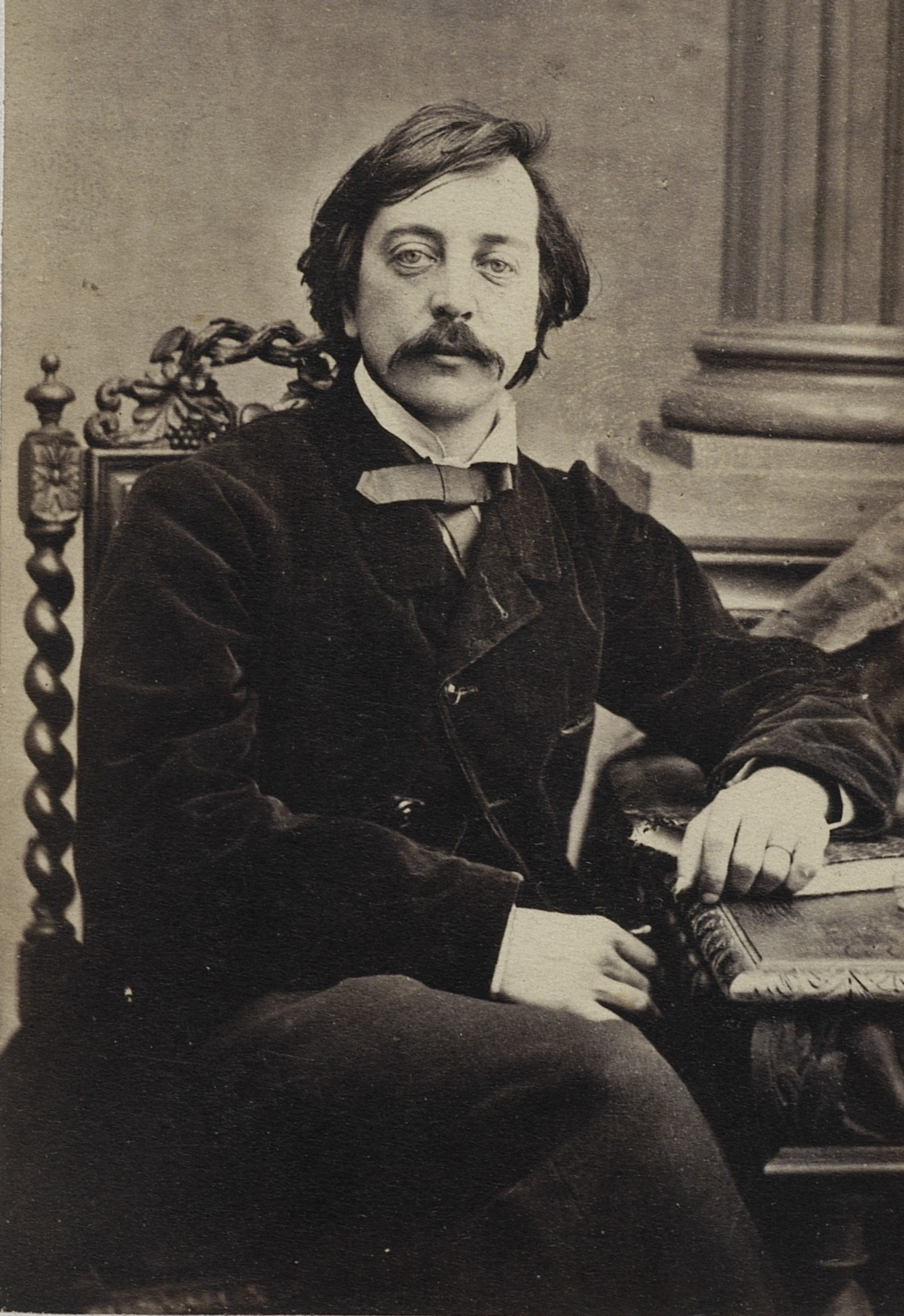

Portraiture, landscape and the visual society of Vilnius
The artistic culture created around Vilnius University cannot be reduced to a sequence of famous names. Its deeper importance lies in the widening of what could be represented and who could become the subject of art. Portraiture recorded the university’s professors, the nobility, clergy, physicians, writers and members of the city’s intellectual circles. Historical painting transformed episodes of the Commonwealth and the Grand Duchy into visual narratives. Genre scenes and studies of local costume brought ordinary social types into the artistic field. Landscape made rivers, estates, castle ruins and roads into bearers of memory. This expansion of subject matter paralleled changes in nineteenth-century society itself: art moved increasingly between aristocratic patronage, urban institutions, public exhibitions and a growing culture of collecting.
The same breadth explains why attribution can be difficult today. Artists trained in related studios shared conventions of drawing, portrait format, landscape composition and academic finish. Works by pupils, followers and lesser-known painters may resemble those of better-documented masters, while the destruction of family archives and the separation of paintings from their original frames, labels and inventories have erased evidence that once made authorship obvious. For collectors and researchers, a “Vilnius School” attribution is therefore only a starting point. A serious identification requires attention to technique, support, inscriptions, provenance, the identity of a sitter or location, and comparison with securely documented works. The network of influence was real, but it should not be turned into a stylistic shortcut.
Between Lithuanian, Polish and Belarusian art histories
The artists of nineteenth-century Vilnius are often claimed by several modern national histories, and in many cases there is good reason for that. Their lives unfolded across territories and languages that do not correspond neatly to modern states. A painter could be born in present-day Belarus, study in Vilnius, write in Polish, work for Lithuanian families, exhibit in St Petersburg and spend years in Italy. The cultural world of the former Grand Duchy of Lithuania was layered rather than exclusive. To force every artist into a single modern category risks losing the very mobility that defined the milieu.
A more productive approach is to treat Vilnius as a cultural centre whose artistic networks extended across the former Commonwealth and far beyond it. This does not remove national histories; it allows them to overlap where the historical evidence requires it. Smuglewicz, Rustem, Wańkowicz, Dmochowski and Kanuty Rusiecki belong to the history of the Vilnius Art School proper; Marszewski, Żamett, Bolesław Rusiecki, Gorecki, Römer and Sleńdziński belong to later generations shaped by its surviving traditions. All can be important within Lithuanian, Polish, Belarusian or wider East-Central European narratives for different reasons. What unites them in this essay is not a claim of exclusive national ownership, nor an attempt to place every nineteenth-century Vilnius artist inside one “school”, but a documented connection to the city and to the artistic culture that developed around the university, its former pupils, private studios, patrons and successor institutions.
Private collections, dispersal and the works that disappeared from view
Museum collections give only a partial picture of the Vilnius School. Portraits were commissioned for families and remained in manor houses; landscapes were bought by travellers, aristocrats and collectors; drawings stayed in albums; sketches and minor works remained in studios. During the nineteenth century these collections were already being divided by inheritance and sale. The uprisings, confiscations, exile and migration of the period accelerated the process. The twentieth century intensified it dramatically: the First World War, new borders, Soviet and German occupations, the Second World War, nationalisation and post-war emigration scattered collections across Europe and North America. Some works entered museums with good provenance. Others lost their histories. Some are documented in old catalogues or photographs but cannot presently be located.
This is one of the reasons the Vilnius Art School and its post-1832 legacy remain a living field of research rather than a closed chapter. A portrait attributed simply to an “unknown Polish painter” may once have belonged to a Vilnius family. A landscape of castle ruins may have lost the name of its location. A work described in a nineteenth-century exhibition catalogue may still exist in a descendant’s house but no longer be associated with the artist under whom it was originally exhibited. The Missing Canvas researches precisely these movements between public knowledge and private survival. Recent work on Jan Rustem, Józef Marszewski and Albert Żamett shows how much can be recovered by combining museum records, old photographs, auction catalogues, family provenance and close visual comparison. The missing oeuvre connected with Vilnius is not always destroyed; often it is simply dispersed.
Why the Vilnius School still matters
The importance of the Vilnius School lies not in the invention of one uniform style but in the creation of an artistic infrastructure. It professionalised training, connected local artists with European academies, encouraged public exhibitions and produced generations capable of working across portraiture, history, religious art, landscape, drawing, sculpture, theatre and illustration. It also gave visual form to a society living through extraordinary political change. The Commonwealth vanished, the university was closed, uprisings reshaped lives and borders shifted repeatedly, yet the artistic networks created in Vilnius persisted. Pupils became teachers; private studios replaced departments; families preserved works; artists carried their training to St Petersburg, Paris, Rome and Minsk and brought those experiences back into the visual culture of Lithuania and the former Grand Duchy.
For present-day research, this history offers two complementary tasks. The first is interpretative: to understand how artists moved between Classicism, Romanticism, academicism and realism without forcing their work into categories that are too rigid. The second is reconstructive: to identify where their paintings and drawings went, which private collections still preserve them and which historically documented works may survive under changed attributions. The more the Vilnius School is studied as a network rather than a list of individual biographies, the more clearly its importance emerges. It was one of the principal engines of nineteenth-century artistic culture in the region, and its legacy is still being assembled from museums, archives, auction catalogues, old photographs and private collections.
Private acquisition
Paintings and works on paper wanted
The Missing Canvas is an active buyer of important works by artists connected with the Vilnius School. We are particularly interested in paintings, drawings and archival material that remain in private or family collections, works with old labels or documented provenance, and historically recorded objects that have disappeared from the published record.
Owners, descendants, advisers and dealers are invited to contact Dominykas Šaudys, Art Dealer & Collector, confidentially. Photographs of the front and reverse, signature, labels, stretcher and frame are especially useful for an initial assessment. Contact The Missing Canvas.
Selected references
- Lithuanian National Museum of Art, “Vilnius Art School and Its Traditions”, permanent exhibition of the Vilnius Picture Gallery.
- Lithuanian National Museum of Art, “Franciszek Smuglewicz: From Ancient Rome to Vilnius University”, exhibition and catalogue, 2022.
- Lithuanian National Museum of Art, permanent exhibition texts on Jan Rustem, Kanuty Rusiecki, Wincenty Smokowski and Walenty Wańkowicz.
- Visuotinė lietuvių enciklopedija, “Vilniaus meno mokykla” and related biographical entries.
- Rūta Janonienė, “Works of Albert Żamett in the Collection of the Lithuanian Academy of Sciences”, Menotyra.
- Visuotinė lietuvių enciklopedija, biographical entries for Kazimierz Jelski, Adam Szemesz, Jan Baniewicz and Aleksander Sleńdziński.
- Lithuanian National Museum of Art, exhibition texts on Tadeusz Gorecki, the Sleńdziński family and the post-1832 continuation of the Vilnius Art School tradition.
- Visuotinė lietuvių enciklopedija, “Lietuvos dailėtyra” — on the continuation of art teaching after 1832 through Kanuty Rusiecki’s studio at the Vilnius Noblemen’s Institute, private academies and artists’ workshops.
- Lithuanian National Museum of Art, “(Non)academic. Bolesław Rusiecki (1824–1913)” — exhibition research on the artist, collector and custodian of Vilnius Art School memory.
- Lithuanian National Museum of Art, “With Heart and Eyes. Wincenty Sleńdziński (1838–1909)” — on his training under Aleksander Sleńdziński and Kanuty Rusiecki and his later career.
- Visuotinė lietuvių enciklopedija, “Alfredas Römeris” — on Römer’s training with Wincenty Dmochowski and Kanuty Rusiecki in post-1832 Vilnius.
- Visuotinė lietuvių enciklopedija, “Tadas Goreckis” — on Gorecki’s early training in Vilnius and Dmochowski’s private painting school.
Comments & research notes
Share what you know
If you know of a work, archive, collection or provenance connected with the Vilnius School, you are welcome to contribute a research note.
Loading comments…